
Portfolio › Popcorn Pizza Cat
Popcorn Pizza Cat: a retail card game, shelf-ready
300 decks of poker-size cards on 300gsm, in a 350gsm semi-matt tuck box — barcoded, rules on the back, and out the door in 7–10 working days.
What the client needed
Popcorn Pizza Cat is a fast family card game, and it wasn't being made for a kitchen table or a convention stall. It was being made for a shop shelf.
That changes the brief. A game that sits in a retail rack has to survive being picked up and put back down a hundred times, has to explain itself in the three seconds someone spends holding it, and has to scan at a till. All of that had to be true of a 300-deck run — a real production quantity, but a small one by overseas standards.
The artwork came to us finished
The client designed everything themselves — card faces, box panels, the lot. Our job was to take print-ready files and turn them into a physical product without any of the character getting lost between the screen and the press.
That's the easiest kind of job to get right and the easiest kind to get wrong. We check bleed, trim safety and colour before anything goes on the press, and send a proof. Nothing prints until the client has seen it.
Dual-ended card faces
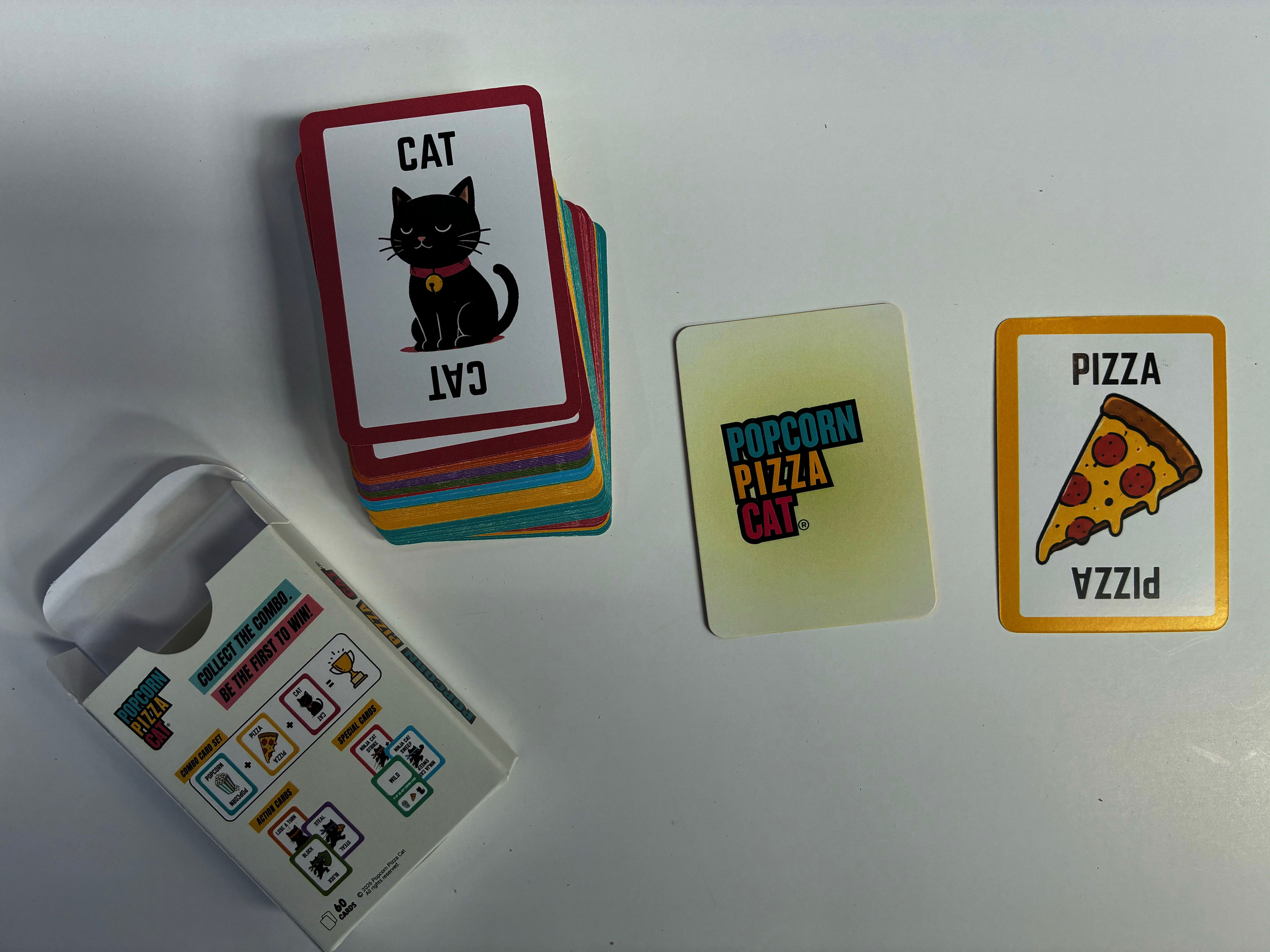
The cards are designed to read correctly whichever way up you pick them up. The face is dual-ended — the same information is mirrored top and bottom, the way a playing card's court cards are.
It's a small design decision that makes a real difference in play. Nobody has to rotate their hand to read it, and nobody accidentally shows the table which way their cards are facing while they sort them.
From a printing point of view, dual-ended faces make registration matter more, not less. If the trim wanders by half a millimetre, a symmetrical design shows it immediately — an asymmetric one hides it. We trim to the tighter tolerance for exactly that reason.
Colour-coded borders
Each card type gets its own border colour. Players sort by colour before they read a word, and a new player can be taught the game by pointing at colours rather than reciting rules.
Colour-coding only works if the colours are consistent from the first deck to the three-hundredth. Running the whole job here, in one production window, means every deck came off the same press setup with the same profile — so a card from deck 12 and a card from deck 287 sit together without one looking washed out.
The tuck box
350gsm with a semi-matt finish. Heavier than the cards, so it holds its shape on a shelf, and matt enough that it doesn't turn into a fingerprint collection under shop lighting.
- Front and sides: the client's artwork and branding.
- Back: a rules summary, printed on the box itself.
- Base: barcode.
Putting the rules summary on the back of the box is the single most retail-minded thing about this product. A shopper picks it up, flips it over, and finds out in about ten seconds whether this is a game they want. No rulebook to unfold, no QR code to scan, no guessing.
Barcode-ready for retail
The box carries a barcode from the first print run, which means the game can go straight into a retailer's system without a sticker over the artwork or a second run to fix it.
Retrofitting a barcode is one of the most common and most avoidable reprints we see. It costs nothing to include at the design stage and it costs a whole production run to add later.
Seven to ten working days
The whole job — cards, boxes, collation — ran in 7–10 working days. That is the difference between manufacturing here and manufacturing offshore, and it shows up most clearly on a run this size.
300 decks is an awkward quantity overseas. It's below most minimums, and even when a factory takes it, the production time plus sea freight puts the game three or four months away. Printing in New Zealand means a 300-deck run is a normal job with a normal timeline — you can restock before Christmas rather than planning for it in July.
Making something like this?
A 300-deck run of a finished, retail-ready card game is a completely standard order for us. Send us your artwork and we'll check the files, quote the spec and send a proof before anything is printed.
Full details on custom card and trading card printing, including stocks, sizes and what to send. If you're still testing the game, prototype printing is the cheaper place to start.
Get a quote on your game
Tell us your deck size, card count and quantity. We'll come back with a price and a realistic timeline.
Request a quote